Preserving customer trust during TechSmith’s shift from perpetual licenses to subscription
Company: TechSmith (Snagit + Camtasia)
Role: Marketing Content Strategist
Timing: June–July 2024
TechSmith transitioned from a perpetual licensing model to a subscription-only structure. I owned end-to-end messaging for the rollout, building a framework that kept communication consistent across teams and channels, minimized negative sentiment (including on social), and helped customers understand what was changing without feeling like we were taking something away.
The situation
This was a high-sensitivity change for a loyal customer base that had invested in Snagit and Camtasia for years. Many customers are (understandably) skeptical of subscriptions, so the risk wasn’t just confusion; it was trust.
The rollout was also complicated by real-world variables: what product(s) a customer owned, what version they were on, whether they had maintenance, and whether they were an individual or a business customer. That meant “one announcement” wasn’t enough. People needed the right message for their scenario, plus clear next steps.
Constraints
High emotional stakes: “subscription” can trigger instant backlash, even from happy customers.
Scenario complexity: product + version + maintenance status + individual vs. business created lots of edge cases.
Cross-channel risk: inconsistency between email, web, PR, social, and frontline teams would amplify confusion.
Internal pressure: it’s easy for messaging to drift into “here’s why the company is doing this,” even when customers really need “here’s what this means for you.”
The insight
For a change like this, trust isn’t built by one perfect announcement. It’s built by scenario-based clarity (so customers can quickly find themselves in the story), and consistent answers everywhere (so support, social, sales, and the website don’t accidentally contradict each other).
What I did
1) Built a messaging matrix to handle every customer scenario
I created a messaging matrix that helped teams quickly identify which “bucket” a customer fell into and what to say. It included:
audience segments and scenarios
key pillars/themes to lean on
do/don’t language (what to avoid, what to emphasize)
objection-aware talk tracks and next steps
This became the source of truth that everything else was pulled from.
2) Wrote the internal + external FAQ system (and kept it sane)
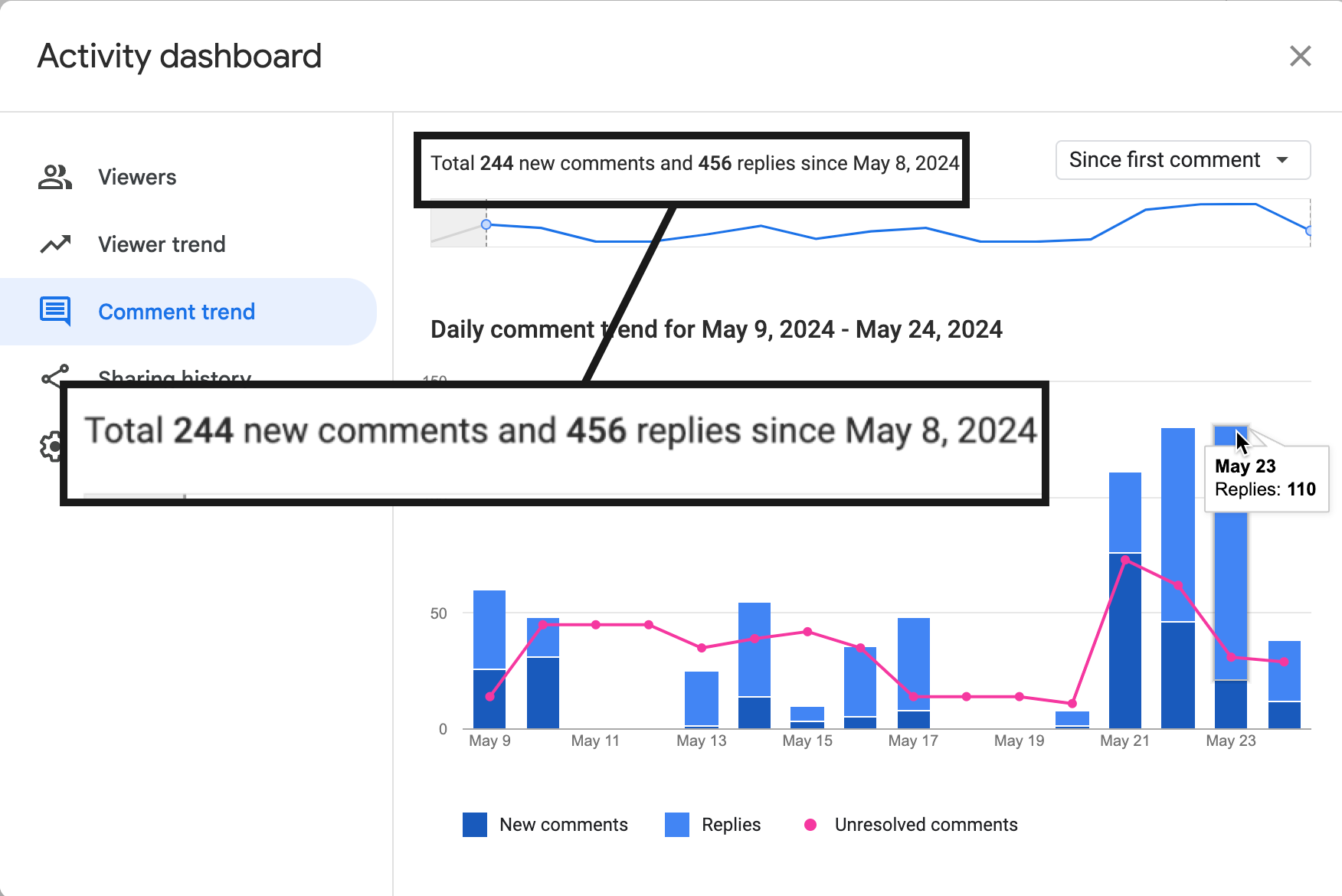
I authored both the public-facing FAQs and internal FAQs so teams had consistent answers across channels. I also coordinated stakeholder feedback at scale, working through 500+ comments and replies from 20+ stakeholders to reach alignment without losing clarity.
3) Coached teams toward customer empathy
A big part of my role was helping internal stakeholders stay anchored on customer value and fairness. For example, there was a strong pull to justify the shift by explaining what TechSmith pays for behind the scenes. I pushed back and redirected messaging toward what customers needed to hear: what stays true, what changes, and how TechSmith is protecting existing investments (including the maintenance-to-subscription promise).
4) Enabled a consistent rollout across channels
I supported messaging across:
customer emails (including CEO-sent communications)
the website
PR
social
a live customer event
For the live event, my messaging matrix informed the presentation content, and I helped answer questions in the chat in real time.
5) Managed “in the wild” responses with guardrails
I monitored social threads and supplied response foundations for common concerns. I also advised teams on when it was best to respond versus when engagement would escalate the situation unnecessarily.
Results
Reach: Customer communications went out to nearly 1 million email recipients.
Sentiment: We tracked response sentiment via Sprout Social tagging plus an internal log, and saw only a handful of negative social responses—a strong outcome for a major pricing-model change.
Behavioral impact: Messaging supported increased upgrades to the latest version and maintenance renewals (the behaviors we were aiming to sustain through the transition).
Internal impact: Teams reported feeling well-equipped because the documentation and enablement materials made the rollout clear and repeatable.
What we learned
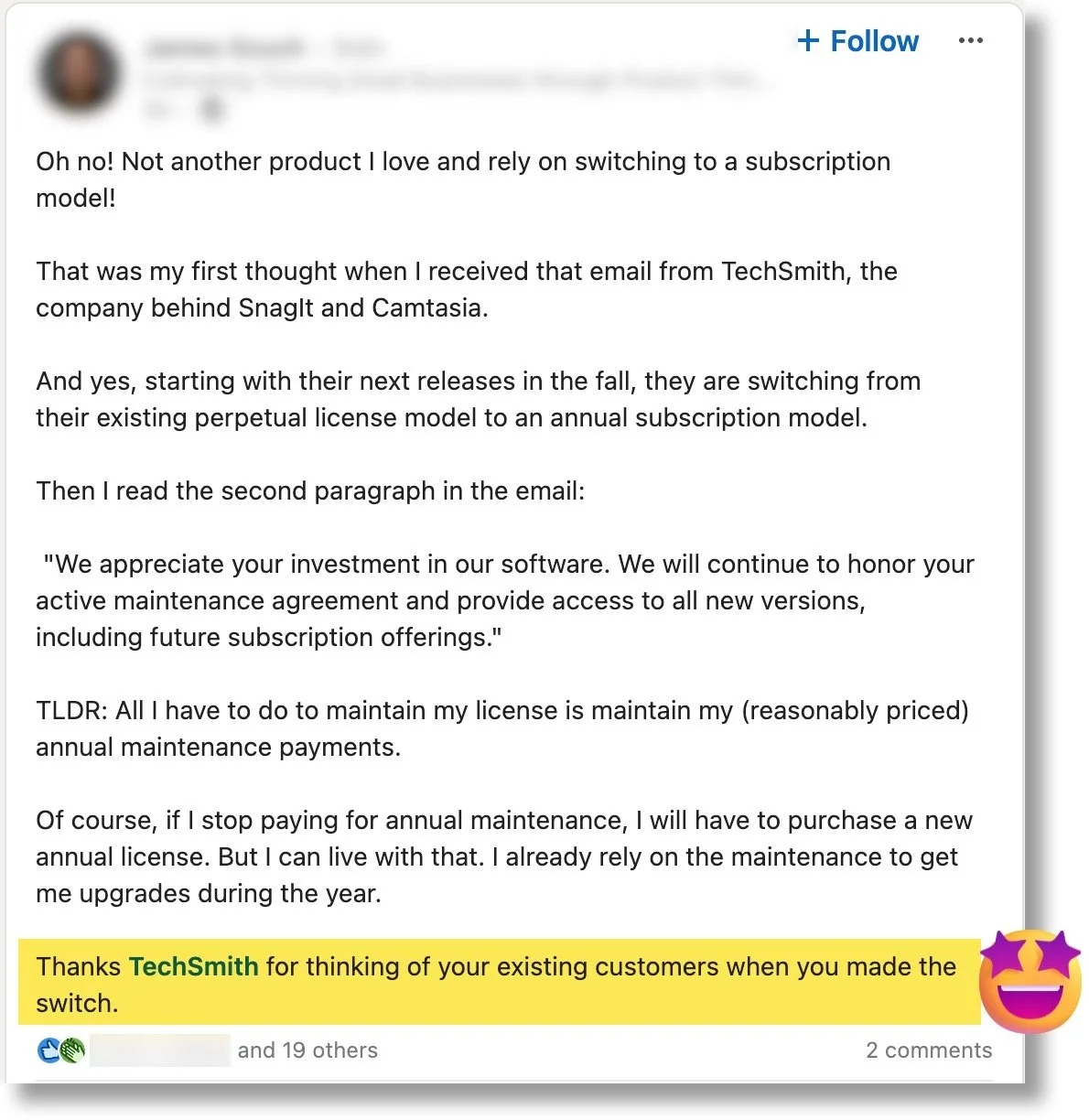
The clearest validation was seeing a long-time customer publicly shift from skepticism to acceptance because the message answered the real question: “What happens to the investment I’ve already made?”
In a LinkedIn post, they opened with: “Oh no! Not another product I love… switching to a subscription model!” Then they quoted our email language about honoring active maintenance and providing access to new versions, including future subscription offerings—and concluded (paraphrasing): “As long as I maintain my (reasonably priced) annual maintenance payments, I’m good… Thanks TechSmith for thinking of existing customers when you made the switch.”
That’s the whole job: make a tough change feel clear, fair, and considered, and preserve trust while the business moves forward.
